Effective written Business Communication – I
- shammipant
- Jun 20, 2025
- 14 min read
We are witnessing a revolution in how much people are communicating daily via the written text form. Averaging 306 billion emails and 18 billion texts daily human beings are extensively communicating. With the hybrid work models here to stay these numbers are going to continue to increase. The effective business communication these days is very important.
Given that 70 to 80% of our work time goes in communicating with others, for any organization nailing down the internal and external communication strategy, process and technique can lead to lead to huge business impact. Research says that 70% of workplace mistakes can be attributed due to communication issues. For a 100-employ organization this amounts to a financial loss of $450,000 annually. This clearly establishes that organizations must invest in improving communication skills.
Written communication via emails takes up almost 50% of an employee’s bandwidth daily. Reading, writing, and responding to emails on an average account for a half a day’s productivity for each employee. Given that 80% people rate their own business’ communication as either average or poor there is tremendous scope to help upskill employees’ written word, which in turn, will lead to improved productivity and business profitability.
Written business communication skills are more than getting the spelling and grammar correct. People perceive who you are from your email communication. This is even stronger when you only have a virtual relationship. Your email becomes your personal brand. You can be perceived, as any of the following depending on how you write:
Warm and friendly
Approachable and flexible
Rude and arrogant
Assertive and efficient
Aggressive and a bully
Weak and passive
Trustworthy and reliable
Empathetic and caring
Unclear and unprofessional
“Business is all about relationships, how will you build them determines how well they build the business” Brad Sugars. A beautiful quote that reminds us that human relationships are the core foundation of any business. The health of the relationships is directly proportional to the health of the business. Many businesses tend to undermine the impact of emails on individual, team and organizational culture and motivation levels. Effective business communication skills if invested in can result in long term strategic benefits to both the employees and the organization.
Good Effective Business Communication and Writing Skills are characterized by these 6 key attributes:
Clarity – Clarity indicates how easy it is to read your message and get the crux of it. If you write very long emails, then by design its tougher to read the email. If you structure you mail using bullets and numbers, it improves the readability. Using active over passive voice, avoiding redundant words and being crisp also helps improve readability.
Writing Style - Writing Style indicates whether you write formally following proper English grammar rules and etiquette or your writing is casual. In Business Communication it is always good to come across professional and formal.
Communication Style – You can come across as any of the 4 types of people through your communication style: 1) Passive which means someone who is not action oriented sounds confused unsure and weak. 2) passive-aggressive – you are deliberately not being clear, and it seems you are not saying what you mean 3) Aggressive: someone who is rude and is a bully 4) Assertive: you respect yourself and the other, are action oriented and want to get the work done transparently.
Empathy - Empathy score of your email means how well you understood, appreciated, connected, and respected the reader's feelings and emotions.
Email sentiment and Emotion – the feelings and emotions you generate in the readers mind through your written word is what is measured by text sentiment and emotion. You could generate a positive, neutral or a negative sentiment. The emptions could range from anger disgust, joy happy to being confused and fear.
Good Spelling & Grammar - The Spelling and Grammar score indicates the number of errors that continue to show up in your email. A high number of errors can make your email difficult to read and make you look unprofessional.
Let us look at each of these attributes a little more in detail:
How do you check for clarity? A piece of writing is simple if it is crisp, clear, and concise. The biggest adversary of simplicity is verbosity. Do not be verbose in your writing. The lesser number of words the crisper the writing.
Look at this sentence:
We discussed in the meeting that it is very important to know that we plan for the inventory and the also the exact number of parts of each and every component.
Rewrite the same sentence crisply:
We agreed to inventory planning of every component in the meeting.
The number of words got reduced by 65%.
The highlighted words are all unnecessary. A meeting is meant for discussion so no need to specify it and you will agree to something only if it is important. No reason to highlight ‘exact number of parts is redundant’. Parts are always exact. Each and every component needn’t be specified too.
Clarity comes when you use simple straightforward vocabulary. Here is another example:
Look at this sentence:
The situation is so confounding and ambiguous that I am overwhelmed and am wondering how to proceed and what to make of it. There are multiple pathways ahead and depending on the alternatives and the criteria of success for each we are perplexed to decide next steps.
Rewrite the same sentence crisply:
We have multiple options to choose from. We will use the impact pay off matrix to decide the option.
The number of words got reduced by 60%. The clarity grew by 100%.
Keep the message simple by focusing on the facts and keeping the emotion out.
Use simple words to describe the situation and in business writing cease being verbose.
Using Active voice over passive voice also helps make the writing direct, simple, and clear. Here let us see how using Active voice vs passive improves clarity tremendously:
This report is made up entirely of passive voice sentences:
The project was reviewed, and 3 key areas were identified to be further reviewed. The decision was to organize separate deep dives for each of these areas. It was expected that after the reviews the root causes would be established. |
Change the passive voice sentences to active voice and see how much crisper it sounds:
We reviewed the projects and identified 3 areas to be deep dived to get to the root causes. |
The other factors that impact the clarity of your emails are:
Keep your sentences and paragraphs short. A sentence should not have more than 25 words and a paragraph should comprise maximum 6 sentences.
Subject line should be 9 words or less and should be connected to the key message in the mail.
How do you get the writing style right? Making your writing compelling requires you to format it well, use numbers and bullets, have call to action and keep it lucid and concise. Mobile is often the medium your reader will use to read your writing. Hence your write up should be mobile friendly. Do not overload it with graphics or text. Keep it light and ensure you use headers and sub headers which allow the reader to navigate the text easily. Using color or different font type and size to highlight certain sections also helps improve engagement.
Opening and closing your email properly ensuring you spell the name of the receiver right is critical to ensuring your writing style comes across as professional. Avoid using the following:
Abbreviations: wherever possible use full forms. Abbreviations are not always understood and can make your email hard to understand.
Too many exclamation marks – this comes across as being over excited. Professional email writing is not about displaying extreme emotions. You want to keep you message factual, neutral, and respectful.
Avoid using Hello or Hola or Ciao in opening and while closing your mail – keep your salutations formal and simple. Hi followed by the person’s name and comma while opening and using Regards or Best Wishes followed by a comma while closing are the best options.
Avoid using slang- using slang words makes your writing look unprofessional and too casual.
What makes your writing direct, bold crisp and confident? Being assertive makes you come across like that.
Communicators who are Assertive:
Very open and transparently state their needs, feelings and encourage the other to do the same
Often use quite a few I statements. They will share their opinion and provide their suggestions and ideas.
Are good listeners. They listen respectfully and emphatically. They look for understanding before agreement.
Will not allow issues to digress, derail or being taken to a completely different track. They look at issues head on and are committed to resolution till not solved for.
Will stand up for what they believe in and will fearlessly protect their stand.
Do not like to push issues under the carpet. Instead, they address them head on.
Are respectful to all and one. They demand respect and give respect.
Communicators who are assertive behave and talk like:
“I know I have choices, and I consider my options. MY response in life is determined by the choices I make”
“I like to be open, transparent and honest. I want to come cross clear and respectful to others. I don’t like obfuscating issues.”
“I have to accept the things I can’t change but give my best shot to what I can. I have no control over others, but I exercise full control on myself”
“I am fully committed to ensuring my rights as an individual are respected and I give my full assurance that I will extend the same respect and understanding to the other person I deal with.”
An assertive person knows that taking caring of oneself is important before you can extend a helping hand to others.
Let us understand assertive style better through an example:
Scenario 1: Feedback
You have an employee who has taken 6 unscheduled leaves in the last two months. When at work, this employee takes many breaks. The impact is he is behind on his targets by 35% which is negatively impacting the overall team goals.
You need to give feedback to a virtual employee. Here are three options, which one would you choose to send?
Option 1: I am furious! You have taken 6 unscheduled leaves in the last one month. You have taken 30 minutes for breaks 10 times. Because of you, the whole team is in danger of not meeting quarter numbers. This kind of behavior is unacceptable. You must be here every day and on your seat all the time.
Option 2: I would appreciate if you know you don’t take any unscheduled leave for the next 90 days and please try if you can limit your breaks and lunch to less than one hour if possible. Please try to achieve your quarter target. Let me know how I can support you.
Option 3: I noticed that you have taken 6 unscheduled leaves in the last one month. In addition, I observed you took 30 minutes for breaks 10 times. The impact is that you are 35% behind on your target and it is also affecting the team’s numbers. I need you to be here every day and keep to scheduled breaks.
Answer:
Option 1 is aggressive. You are putting your need ahead of the other person and using strong angry emotions such as furious. The team meeting the team’s goal is more important the individual. Blaming the person playing a victim by using phrases like “because of you”. Use of strong words such as “team is in danger”, “you have” and “unacceptable.
Option 2 is passive. You are putting the other person’s need ahead of your own to ensure the team and the individual meet its target. Use of words such as “please try”, “you know”, “if you can” or “if possible” are tentative and not direct enough since this is feedback for an employee in your team.
Option 3 is assertive and the correct answer. You are giving equal importance to your and your employee’s needs. While giving feedback, starting with I statements makes the feedback your opinion and respects that the other person may have a different perspective. For example, “I noticed, I observed, and I need you”. The use of I statements along with data makes it an assertive, effective & direct feedback.
What is empathy and why is it important? Empathy means to understand what the other person is saying. By listening well, you can put yourself in the other persons shoes. You don’t have to agree with anything or everything the other person is feeling. Empathy is not about agreement it is about understanding. Empathy has no place for judgement. Letting your emotions take precedent and felling angry, frustrated or being disappointed listening to the other person is the opposite of empathy.
Why is empathy so hard? There is a myth that all of us are born empathetic. That is not true. Research shows that only 20% of are predisposed to be empathetic. 80% of us must work on it very consciously. Empathy requires a lot of investment in terms of time. You must make a committed effort to make time for the other person to listen to them and understand their situation. It is not something you can hurry up with. Again, do not mistake empathy with sympathy. These are two very different things.
To be more explicit here are some key points on what empathy means:
Listening to the other person and simply trying to understand what they are feeling.
Without any judgment simply understanding and respecting how the other person feels.
How the other person feels matters to you. Demonstrate that you care.
Paraphrase. Express in your own words what you think you understood of how the other person is feeling. Do not add any personal colour emotion or judgement to it. It is not about you. It is about the other person.
Silence speaks more than words. Understand the unsaid, read between the lines and get the full context of what the other person is experiencing.
Below are examples of empathetic words and phrases which you can use in your emails:
I experienced the same.
I really want to hear what you have to say.
Give yourself some time to process.
If I was you, I would feel the same.
I wish things were different.
I can imagine how that might have felt.
I can see this is making you upset.
You are frustrated.
I know how you feel.
That must be hard.
Wow. I don’t know what to say.
I can’t imagine what you must be going through.
I wish I could make it better.
It makes me really sad to hear this happened.
Thank you for sharing with me.
I’m glad you told me.
This must be hard to talk about. Thanks for opening up to me.
I’m here for you.
That must have annoyed you.
We really appreciate.
I have experienced a similar issue.
“Empathy works so well because it does not require a solution. It requires only understanding”. John Medina.
How can you choose the right words to get a positive sentiment and a positive emotion?
Negative Words or Phrases | Positive Words or Phrases | |
1 | Weakness | Development |
2 | Constructive Criticism | Growth |
3 | Negative | Area for improvement |
4 | Past issue | Opportunity |
5 | Made a mistake | New perspective |
6 | Failure | Learning |
7 | The problem is… | Possible options or solutions |
8 | Bad news | The situation is |
9 | Facing many hurdles | Facing challenges such as |
10 | Resistance | We need to understand their perspective better. |
11 | Against us | They are playing the devil’s advocate. |
12 | It will never happen. | It can happen if we get the right support. |
Your choice of words can make a big impact to how your message is perceived. Words are immensely powerful. You can inspire, motivate, and create the impossible through the visualization of reality that words help create.
Choose your words carefully. Below are examples of you can choose to express yourself in a positive manner:
Words are not expensive. It is how to use them that can cost you dearly. Once spoken or written words can’t be taken back. Be watchful before you choose your words. There areuations in life where you must deliver sad or unfortunate news. In those situations, you can still exercise choice to use inspirational and motivational words to make the overall sentiment les negative.
Your choice of words determines the sentiment and emotion you generate in your reader’s mind. KWurd an AI Coach can parse your email and determine the sentiment and emotion:
Let us look at an email which generates a negative and sad emotion in the reader’s mind:
Hi Arvind. I have some sad news to share. Our revenue numbers declining and by the end of the 2nd quarter we will be down 22%. We have no choice but to let go of 20 people. It is unfortunate seeing highly productive people who we have trained over the years leave. If only we could arrange for some budget that could get us through this difficult phase, we might be able to hold on to these people.

There is always a way out where you can choose your words to make something sad sound less sad and more joyful. We will re-write the email above and demonstrate that:
Hi Arvind, we are in a situation such that our revenues are declining. However, the good news is that if we can find $100,000 to tide us over this quarter, we should be good. We have a strong team now who are working hard at plowing the market. Q3, I see a resurgence. The numbers can be surprisingly good if we stay committed.

Your word choice is in your hands. Always choose word that will generate positive sentiment and pleasant emotions.
How to get the spelling and grammar of your email right? Getting your spelling and grammar right in today’s time is non-negotiable. What helps is is that it is easy because you have many spelling and grammar checking tools available. kWurd gives you in-body feedback for your spelling and grammar errors in emails, Instagram and Facebook posts, on any app or tool you write on using Google Chrome.
Grammar is concerned with the structure of the language and the manner in which the words and phrases are combined to produce sentences.
Lindley Murray is considered the father of English grammar. He started as a lawyer and later went on to become the Chief Justice of the Supreme Court in 1760’s.
Grammar is significant; for without grammar, no language can survive. Grammar is the cement with which the bricks of language are glued together. Without it, even basic English can be very hard to understand.
Let’s see the importance of word order in these instances. Each sentence has a different meaning:
The woman the man saw was starving.
The woman say the man was starving.
The two sentences below can mean completely different things:
This is a short story forgotten by Louisa May Alcott.
This is a forgotten short story by Louisa May Alcott.
US English and British English are similar but different. For example, color is spelled as “color” in the US and as “colour” in the UK.
In US English, you need to add a comma before a conjunction. The comma is not required in British English. Here are examples.
I want an apple, banana, and strawberry milkshake. (US English)
I want an apple, banana and strawberry milkshake. (UK English)
kWurd will check for a valid word in the wrong context, e.g. “This is gong to be awesome. You are a great fiend to me.”
Do you struggle with spelling mistakes? We all do. Here are some common misspelled words.

Let’s look at a few examples.
We are going to move forward by Friday, April 17 we think it should be possible if we are able to close the project deliverables by Monday, April 13.
What is wrong with this sentence?
Answer: There are two sentences combined. The second sentence “we think” should start with a capital letter.
By Monday, we will have a clear direction from the management.
How about this one?
Answer: This sentence uses passive voice. An active voice would be rewritten as
Management will give us a clear direction by Monday.
We are really happy that tom is happy with our presentation.
And, this one?
Answer: The proper noun Tom, is not capitalized. Knowing which words to capitalize can be confusing, it is good to double check your capitalization.
100,000 people collected for the protest.
What could be a better verb choice?
Gathered. kWurd will suggest word choices.
It will also improve your readability.
The opposite of this would be sounding indifferent, frustrated, angry, or parroting standard responses which demonstrate a lack of personal touch.
Answer:
Sound instead of sounding.
Show is a simpler word than demonstrate.
On top of that, given their schedules they have limited and specific timing when they are available.
Answer: On top of that, given could be reduced to just one word given.
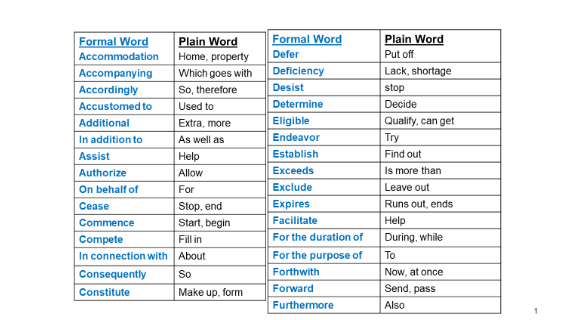

Here are confusing words that we commonly misuse.


Avoid repeating the same word more than twice in 5 sentences. This excludes helping verbs for example to be, to have, to do), prepositions such as to, from, or under and articles like a, an, the.
Why should you do this? Because it bores the reader and sounds like you have a limited vocabulary.
If you look at the trends of English today, especially given the prominence of social media, writing tends to be more casual, direct and abbreviated. However, you want to look good in all your email writing and postings, so you need a checker to help catch small mistakes that can have a big impact on your personal and company brand. Written business communication is effective in this matter.
kWurd (https://kwurd.com/) an AI based assessment tool can check for your email’s:
Clarity
Writing Style
Communication Style
Empathy
Text Sentiment & Emotion
Spelling and Grammar.
kWurd has learning lessons built in the web app which comprise coaching videos, practise and fun exercises as well as quiz questions on each of the above topics. Here, you can get to about how to write an effective business communication.

Write crisply, clearly, professionally, assertively, and empathetically! It will help build your brand and deliver business outcomes. Happy Writing!


Comments